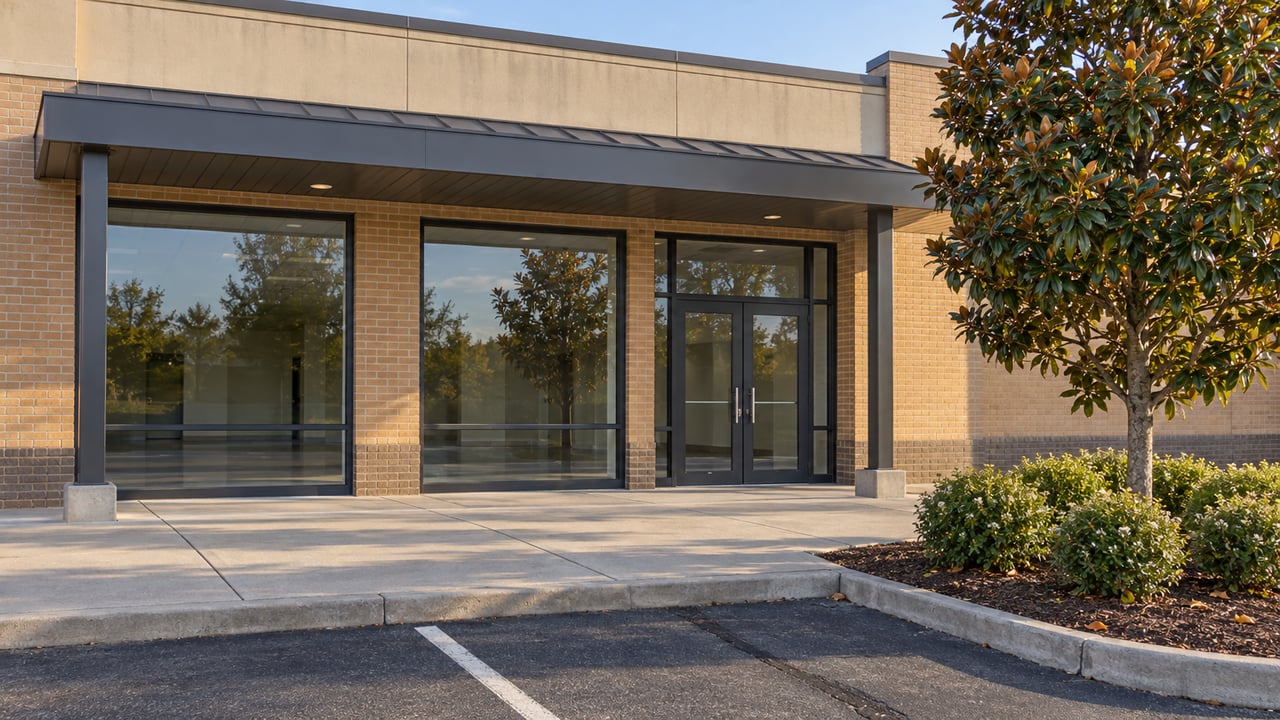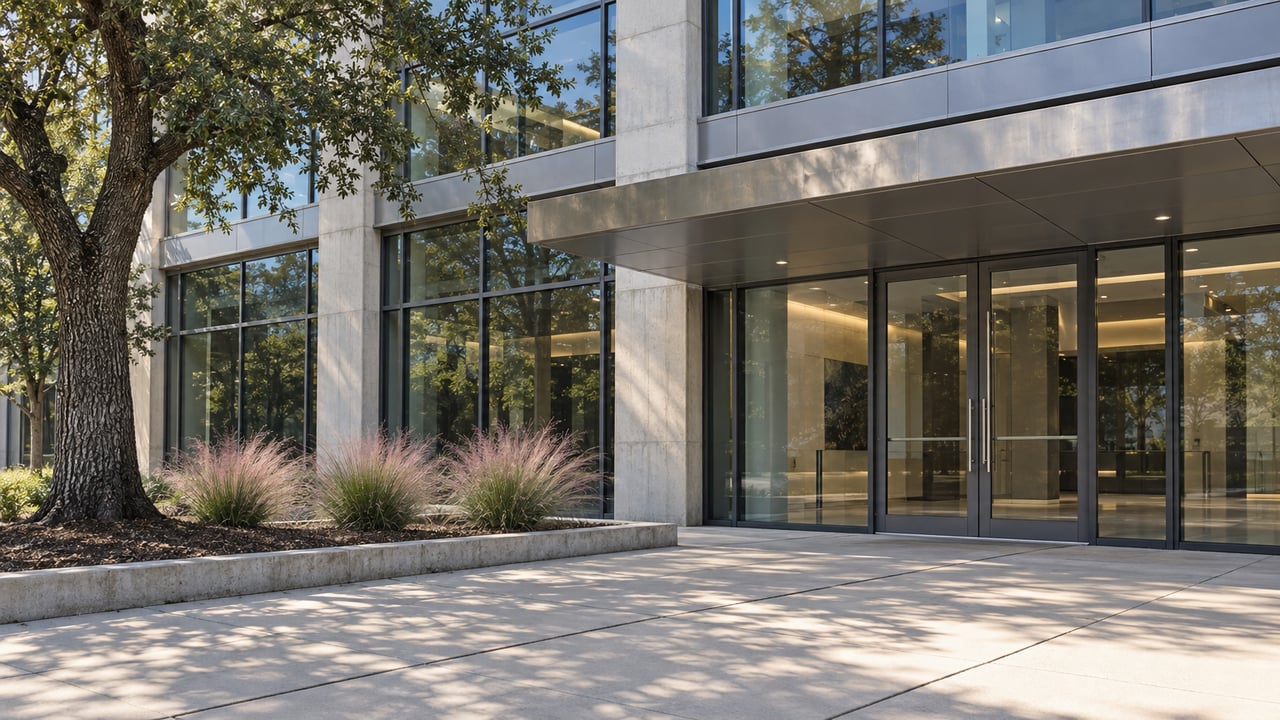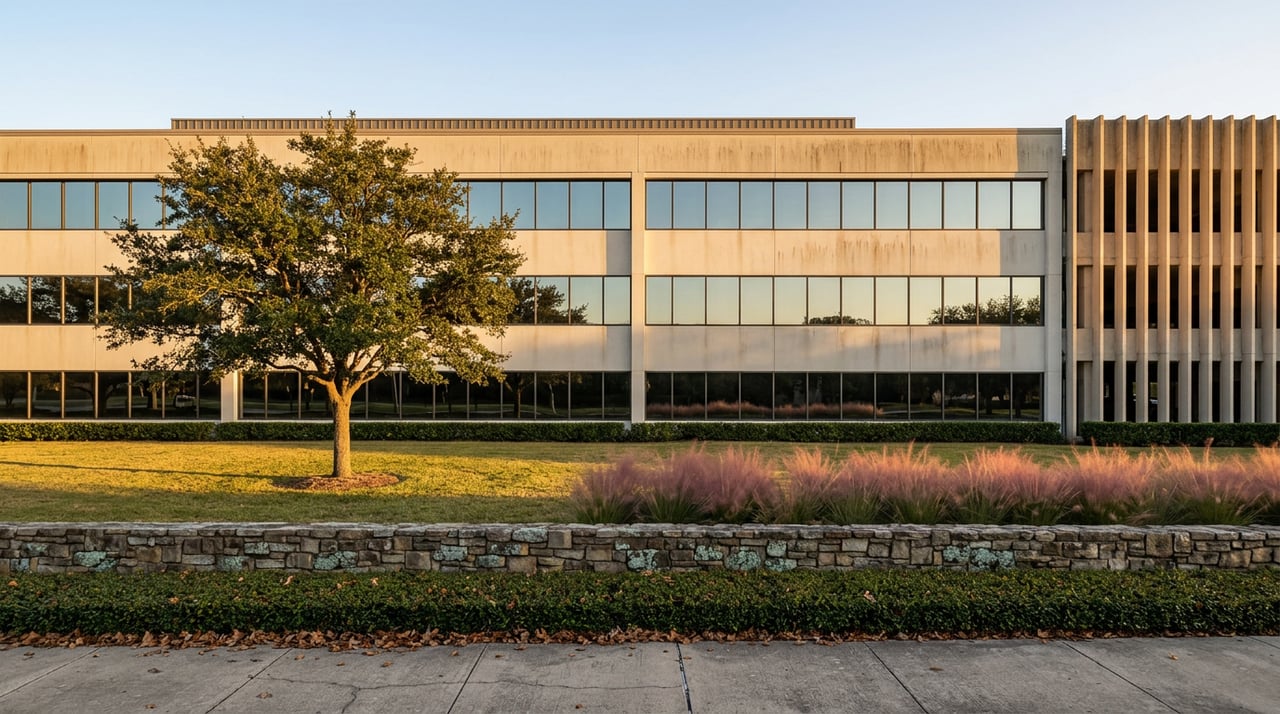
Three Uptown office sales closed between July and October 2026. A corporation bought the 64-story tower that carries its name. A Greenway Plaza investor paid roughly $200 per square foot for two renovated 1970s high-rises. A lender-side seller auctioned off an empty 19-story tower. Each buyer paid a different price and holds a different reason for owning. If you sign a lease or underwrite an acquisition in any of these buildings, the new owner's basis will shape the terms more than any submarket vacancy rate.
Three Deals, Three Owners, One Submarket
| Property | Size | Buyer | Reported price | Approx. per SF | Status at sale |
|---|---|---|---|---|---|
| Williams Tower, 2800 Post Oak Blvd. | 1.4 million SF | Williams, the tower's largest tenant | More than $300 million, not disclosed by the parties | About $214 | Reported 83% leased |
| Park Towers, 1233 and 1333 West Loop South | 552,250 SF | Interra Capital Group | About $110 million, expected, not disclosed | About $200 | 89.5% leased |
| 3000 Post Oak Blvd., the former Bechtel tower | 433,528 SF | 3000 Post Oak Realty LLC | Not disclosed | Unknown | 100% vacant |
We calculated the per-square-foot figures from reported prices, so treat them as approximate. One brokerage's Q3 2026 sales table lists Park Towers at 500,181 SF instead of 552,250. Under that count, the price per foot comes out higher.
For context, Avison Young puts the average Houston office sale price through Q3 2026 at $143 per SF, up from $139 a year earlier. It also counts more than $2 billion in metro sales so far this year. Both Uptown deals with reported prices came in well above that average, in a submarket with far more empty space than the metro's best buildings.
The Vacancy Rate Depends on Who's Counting, and It's High Either Way
The three major Q3 2026 reports each draw the submarket a little differently, so their numbers can't be blended:
- CBRE, "West Loop/Galleria": 25.9% total vacancy, 27.3% availability, 451,000 SF of sublease availability, $22.49 per SF NNN asking rent, and 84,000 SF of positive net absorption in Q3. Its Class A row shows 25.0% vacancy at $27.41 NNN.
- Avison Young, "Galleria/West Loop": 33.0% direct vacancy, 33.8% total vacancy, 300,308 SF of sublet availability, $38.03 full-service direct asking rent, and 14,595 SF of Q3 absorption.
- Savills, "West Loop/Galleria": 26.5% availability and $35.11 average gross asking rent.
CBRE quotes rent on a NNN basis. The other two quote full-service. Compare rent figures across these reports only after adjusting for that difference.
Every version tells the same story. Roughly a quarter to a third of Uptown's office space is empty, and absorption is positive but small. Buyers are still paying around $200 a foot, because the empty space and the buyer demand are concentrated in different buildings. Across the metro, Avison Young reports trophy direct vacancy at 8.5% in Q3 2026, its lowest in a decade, while lower-quality classes topped 27%.
Some of Uptown's absorption is tenants moving around inside the submarket. CBRE's largest Q3 move was Westlake relocating within West Loop/Galleria from 2801 Post Oak Blvd. to 143,000 SF at 5444 Westheimer Rd. 5444 Westheimer is a 21-story building also known as CMS Energy Tower, owned by Tanglewood Property Group. CBRE's summary puts the space Westlake left at 110,000 SF, while its detailed report says 150,200 SF. Either way, one building gained a tenant and another got that block of space back, so a move like this barely changes the submarket total.
A Low Basis Changes What a Landlord Can Accept
Park Towers shows how this works. The two 18-story buildings went up in 1972 and were significantly renovated between 2016 and 2022. They carry LEED Gold and Energy Star certifications, and a six-level garage provides about 1,700 spaces, a ratio of 3.5 per 1,000 SF. Interra financed the purchase through Morgan Stanley and kept Transwestern's Jack Scharnberg and Doug Little on the leasing assignment.
The seller's broker, Rick Goings, described the deal this way to Realty News Report:
"Park Towers represented an exceptional opportunity to acquire a premier Galleria office asset with attractive in-place cash flow at a basis well below replacement cost."
The phrase that matters there is "below replacement cost." An owner that paid around $200 a foot for stabilized, renovated space can make money at rents that would lose money for a developer building new. That gives the new owner room on rent and concessions that the previous owner's capital stack may not have allowed. In the same report, Goings put the weighted average lease term at 6.3 years. With most of the income locked in, the new owner's attention goes to the 10.5% of space that isn't leased and to each renewal as it comes up.
Interra is also a repeat Houston buyer. Realty News Report noted that the deal followed Interra's purchase of the 4.5-million-SF Greenway Plaza campus last year. A tenant comparing Galleria and Greenway space may find itself pricing two buildings owned by the same company.
At the top of the market, concession room is shrinking. Avison Young reports that Houston trophy and Class A space averaged $46.04 per SF full-service asking rent in Q3 2026 against $44.77 net effective. It reads that $1.27 gap as a sign that concession packages have shrunk meaningfully. So the negotiating room is in buildings like Park Towers, where a recent buyer's low basis creates flexibility, more than in the newest towers.
When the Anchor Tenant Becomes the Landlord
Williams Tower works differently. Williams, an energy infrastructure company, is the tower's namesake and largest tenant, and CBRE's announcement credits it with more than 40 years in the building. It expanded and renewed its space in fall 2025, then bought the building to use about 360,000 SF as its Houston headquarters. The Houston Chronicle reported that the sale closed July 20, and Bisnow reported the price at more than $300 million with the tower 83% leased. Invesco Real Estate was the seller.
That leaves roughly a million square feet of tenant space in the hands of a company whose main business is not real estate. The leasing team stays the same: CBRE's Rima Soroka and Nina Seyyedin, who handled the 2025 Williams extension, will keep leasing the building for the new owner. What has changed is the owner's reason for holding the building. An owner-user cares about controlling its headquarters, as the buyer's broker described the deal. Investment funds care about the yield they can show investors at exit. Those goals can lead to different decisions on expansion rights, building rules and how fast a vacant floor gets leased.
An Empty Tower With No Plan Announced
3000 Post Oak shows where the low end of the market sits. The 1979 tower is part of the 23-acre Lakes on Post Oak park that Hines developed, which has three office buildings and a four-acre lake. Bechtel occupied the whole building when it reportedly sold for $175 million in 2014. Bechtel later moved to CityWestPlace in Westchase. JLL then marketed the building through an online auction for LNR Property, and it sold fully vacant. Chron reported that the sale followed distress around an $80 million loan. The Real Deal reported that the buying LLC is tied to a Houston law firm.
No price was disclosed. Realty News Report listed residential, hotel or the buyer's own office use as possibilities, but no plan has been announced. The 2014 price works out to roughly $404 a foot, and the two neighboring Lakes on Post Oak towers also traded that year, at about $100 million and $125 million. Whatever the new buyer paid, it is the most recent price set in the park, and it was set for a building with no tenants.
What to Ask Before You Sign or Bid in Uptown
Each owner type changes a different part of the deal. Before you commit:
- Ask when the building last traded and at roughly what basis. A 2026 buyer at about $200 a foot can price space differently than an owner still carrying a 2014 cost.
- Ask whether the landlord also occupies the building. At Williams Tower, find out how expansion requests and building-rule decisions will be made now that the anchor tenant owns it.
- Ask how much of the building's income is already committed. Park Towers' 6.3-year weighted average lease term means the new owner is focused on a limited amount of open space, which affects how eager it is to fill your floor.
- Ask whether the leasing team stayed after the sale. At both Williams Tower and Park Towers it did, so you are dealing with familiar brokers working under a new owner's goals.
- Confirm whether rent quotes are NNN or full-service before comparing them with submarket averages, which mix both.
- For buildings next to a vacant or repositioning tower, ask about the neighbor's plans. A conversion or a full office lease-up at 3000 Post Oak would change the competition at Lakes on Post Oak.
FAQ
Is Uptown office vacancy improving? Slightly. CBRE recorded 84,000 SF and Avison Young 14,595 SF of positive Galleria-area absorption in Q3 2026, with vacancy still above 25% in both reports.
Will 3000 Post Oak become apartments or a hotel? No plan has been announced. Those uses have been mentioned only as possibilities.
Do metro-wide rent figures apply to Uptown? Only as context. Submarket asking rents differ by firm and by rent basis, and individual buildings vary even more.
Aspire CRE tracks Uptown ownership, pricing and leasing activity building by building, so you go into the conversation knowing what the other side paid. Discover Your Property's Value.